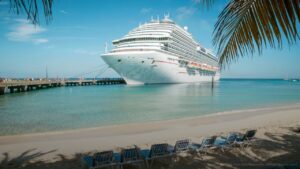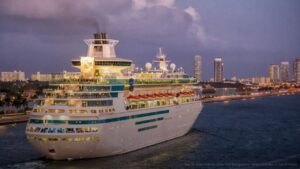
The Mediterranean is one of the world’s most rewarding cruise regions, but its popularity can also create a problem. On peak summer days, famous ports such as Santorini, Mykonos, Dubrovnik, and parts of the Italian coast can receive large numbers of visitors at the same time. Travelers who want the coastlines, cuisine, history, and islands without feeling as though they are moving through the Mediterranean with thousands of other passengers should look beyond conventional mega-ships. A thoughtfully selected luxury small ship Mediterranean cruise can provide access to smaller harbors, longer stays, yacht-style anchorages, and ports that large vessels cannot use.
Ship size alone, however, does not guarantee a crowd-free vacation. A 100-passenger yacht arriving in a famous port alongside several large ships can still put you in the middle of peak congestion. The best ultra-luxury Mediterranean cruises without crowds combine a genuinely small vessel with intelligent port dispersal, shoulder-season dates, overnight calls, late departures, and less obvious destinations. For travelers researching boutique Mediterranean cruises 2027, lines such as PONANT, SeaDream Yacht Club, Windstar Cruises, and Seabourn offer particularly interesting ways to experience the region at a more intimate scale.
Quick Answer: For the smallest and most yacht-like experience, PONANT’s 32-guest Le Ponant stands out. SeaDream’s 112-guest yachts and Windstar’s 148-to-342-guest vessels are excellent for small Mediterranean harbors, while the 600-guest Seabourn Ovation provides more onboard amenities and all-veranda suites while still reaching boutique Mediterranean ports.
Best Small-Ship Luxury Mediterranean Cruise Options
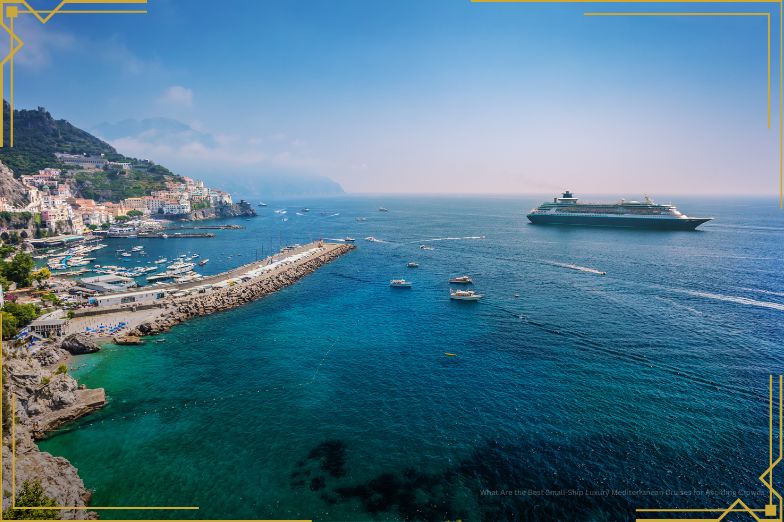
Small-Ship Mediterranean Cruises for a More Intimate Journey
The biggest advantage of a small ship is not simply having fewer passengers around the pool. Smaller vessels can use harbors, anchorages, and tender locations that are impractical for large cruise ships, which can fundamentally change the experience ashore. The strongest itineraries combine these physical advantages with thoughtful scheduling, so travelers spend more time in communities and less time competing with peak cruise traffic.
What Makes a Small-Ship Cruise Better for Avoiding Crowds?
- Lower passenger numbers: Smaller vessels reduce the number of people disembarking from your own ship at the same time.
- Small-port access: Yacht-size ships can visit harbors such as Portofino and Hvar that feature prominently in small-ship Mediterranean programs. SeaDream, for example, lists both destinations on its 2027 schedules.
- Port dispersal cruise itinerary: A strong itinerary spreads visits among major cultural centers and smaller ports instead of moving from one high-volume cruise destination to another.
- Longer stays ashore: Late-evening departures allow travelers to remain after day-trip crowds begin to disappear.
- Overnight calls: Spending the night in or near a destination can make early mornings and evenings substantially more enjoyable.
- Tender and yacht-harbor access: Smaller vessels can sometimes anchor closer to historic centers or use ports that cannot accommodate large cruise ships.
- Flexible shore experiences: Smaller guest counts make private guides, small-group excursions, and customized touring easier to arrange.
- Shoulder-season sailing: May, early June, September, and October can offer a different atmosphere from the busiest July and August period.
The key is to think of small-ship cruising as an itinerary strategy rather than simply a ship category. The best mega-ship overcrowding alternatives combine a small vessel, sensible timing, and ports that distribute travelers more evenly across the Mediterranean.
Which Small-Ship Luxury Mediterranean Cruise Lines Stand Out?
There is no single “best” luxury line for every traveler. Some guests want the intimacy of a private yacht, while others want multiple restaurants, a spa, larger suites, and private verandas without moving to a 4,000-passenger vessel. The most useful comparison is therefore based on passenger capacity, itinerary style, and the kind of Mediterranean experience each ship is designed to provide.
| Cruise Option | Approx. Guest Capacity | Best For | Crowd-Avoidance Advantage |
|---|---|---|---|
| PONANT Le Ponant | 32 | Ultra-intimate yacht sailing | Tiny passenger count and access to secluded coastal itineraries |
| SeaDream I & II | 112 | Casual luxury yachting | Small harbors, late stays, and yacht-style Mediterranean routes |
| Windstar Yachts | 148–342 | Relaxed boutique cruising | Direct access to ports such as Portofino, Hvar, Capri, and Bonifacio |
| Seabourn Ovation | 600 | Full-service ultra-luxury | Boutique ports combined with more restaurants, facilities, and all-veranda suites |
PONANT confirms that Le Ponant carries a maximum of just 32 guests, while SeaDream I and II accommodate 112 each. Windstar’s Mediterranean fleet spans approximately 148 to 342 guests, and Seabourn Ovation carries 600 guests in 300 all-veranda suites.
For travelers seeking boutique maritime luxury, the smaller end of this table will feel closest to traveling aboard a private yacht. Seabourn is larger, but it can be a particularly strong compromise for travelers who want boutique-port access without giving up the facilities of a more substantial luxury ship.
PONANT Le Ponant for the Most Intimate Mediterranean Sailing
For travelers whose definition of luxury includes privacy and very low passenger numbers, Le Ponant is difficult to overlook. The three-masted sailing yacht carries a maximum of only 32 guests across 16 staterooms and suites, supported by 33 crew members. That places it much closer to a private-yacht experience than to conventional cruising.
Why Le Ponant Appeals to Crowd-Averse Travelers:
- Maximum of 32 guests: The passenger count is smaller than many organized land-tour groups.
- Sailing-yacht atmosphere: The vessel is designed around intimate sailing rather than large-scale onboard entertainment.
- Croatian island itineraries: PONANT’s July 2027 Croatia sailing includes Hvar, Mljet, Šipan, and the Bay of Kotor.
- Off-the-beaten-path approach: PONANT specifically describes the itinerary as exploring ports beyond the conventional tourist route.
- Marina access: Kayaks, paddleboards, and water activities allow the sea itself to become part of the itinerary rather than requiring every day to revolve around a large port.
- High staff presence: With 33 crew for a maximum of 32 guests, the experience can be exceptionally personalized.
If your priority is hidden enclave luxury sailing, Le Ponant is one of the clearest choices. The trade-off is that a vessel this intimate cannot provide the same breadth of restaurants, entertainment, public spaces, or suite categories found on larger luxury ships.
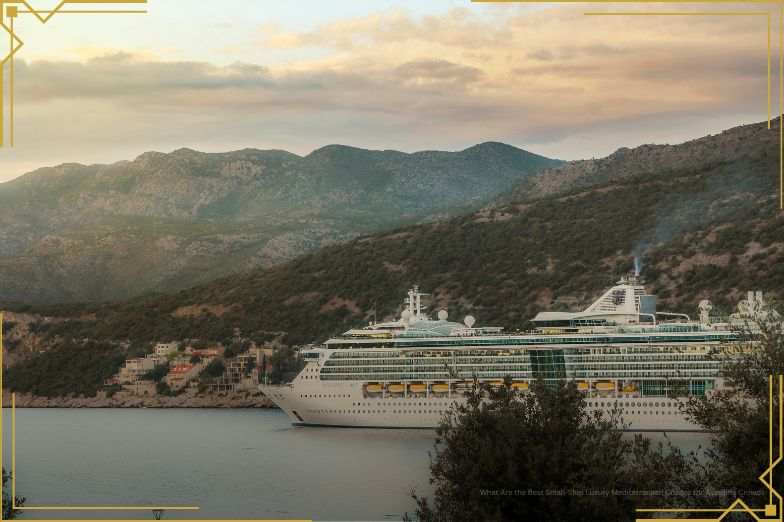
SeaDream Yacht Club for Yacht-Style Mediterranean Cruising
SeaDream occupies an appealing middle ground between private-yacht intimacy and traditional luxury cruising. SeaDream I and SeaDream II each carry a maximum of 112 guests with 95 crew, giving the vessels an unusually intimate scale.
Why SeaDream Works Well for Mediterranean Port Dispersal:
- 112-guest capacity: Disembarkation and onboard spaces naturally involve far fewer passengers than a conventional cruise ship.
- Portofino access: SeaDream has multiple 2027 itineraries calling at Portofino, including an Italian Riviera Wine Voyage and French and Italian Riviera sailings.
- Hvar itineraries: SeaDream lists multiple 2027 sailings visiting Hvar along Croatia’s Dalmatian Coast.
- Late departures: Several itineraries remain in smaller ports until evening or late evening, helping guests enjoy destinations beyond the busiest middle-of-the-day period.
- Adriatic variety: A 2027 Rome-to-Venice itinerary includes Capri, Amalfi, Taormina, Porto Montenegro, Kotor, Dubrovnik, Hvar, Mali Lošinj, and Piran.
- Yacht-oriented experience: SeaDream describes its vessels as boutique yachts rather than conventional cruise ships, with outdoor dining and marina-style amenities.
SeaDream is particularly attractive for couples who value relaxed luxury and destination time over large theaters, elaborate entertainment programs, or dozens of onboard venues. It is also one of the strongest options when travelers ask, “What cruise lines go to small ports like Portofino or Hvar?”
Windstar Cruises for Small Ports and Casual Luxury
Windstar is another strong choice for travelers who prioritize smaller destinations and a relaxed onboard atmosphere. Its Mediterranean ships range from approximately 148 to 342 guests, depending on the yacht, making the fleet significantly smaller than most mainstream cruise vessels.
Why Windstar Is Strong for Mediterranean Exploration:
- Small passenger capacity: Windstar’s Mediterranean yachts carry between 148 and 342 guests.
- Small-harbor routing: Windstar specifically highlights direct access to destinations such as Portofino, Capri, Bonifacio, Hvar, Mykonos, and Amalfi.
- Sailing-yacht options: Wind Star, Wind Spirit, and Wind Surf provide a more traditional sailing atmosphere.
- All-suite yacht options: Star-class vessels offer additional space while keeping passenger numbers relatively low.
- Marina platform: Selected itineraries can incorporate swimming, kayaking, paddleboarding, and water activities from the yacht.
- Longer destination time: Windstar emphasizes immersive itineraries, longer port days, and overnights as part of its small-ship model.
For travelers researching the best yacht cruises in Croatia, Windstar deserves comparison with SeaDream and PONANT. The best choice comes down to the precise ports, dates, ship, and desired level of formality rather than the cruise-line name alone.
Seabourn Ovation for Small-Port Access With More Onboard Luxury
At 600 guests, Seabourn Ovation is considerably larger than Le Ponant, SeaDream, or most Windstar vessels. It is therefore not the answer for travelers who want the smallest possible ship. However, it can be an excellent option for guests who want an ultra-luxury Mediterranean cruise without crowds relative to mainstream ships while retaining more restaurants, public spaces, spa facilities, and larger suite choices.
Why Seabourn Ovation Is Worth Considering:
- 600-guest capacity: Seabourn Ovation carries a maximum of approximately 600 guests.
- All-veranda accommodation: The ship has 300 oceanfront suites with private verandas, making it especially appealing for travelers searching for private balcony cruise itineraries in Greece, Turkey, and elsewhere in the Mediterranean.
- 2027 Mediterranean season: Seabourn plans Mediterranean voyages from April through November 2027.
- Extensive port selection: Its 2027 Mediterranean program is scheduled to visit 77 ports across 17 countries.
- Boutique harbors: Seabourn specifically says Ovation’s size allows access to hidden harbors and boutique ports.
- Longer time ashore: Seabourn increasingly incorporates late departures and extended evenings into Mediterranean itineraries.
A Seabourn Ovation small-port routing itinerary can therefore be a smart choice for travelers who want to avoid mega-ship scale without sacrificing resort-style luxury. It is particularly well suited to travelers who view their private veranda, dining choices, and onboard amenities as important parts of the vacation.
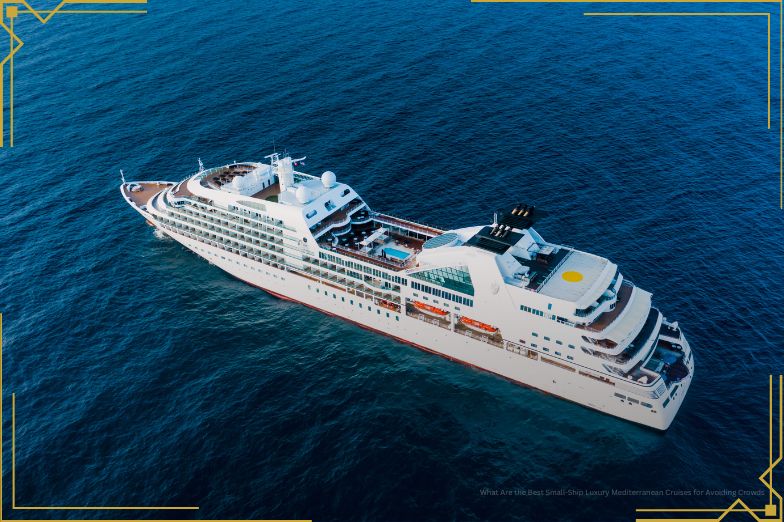
Which Luxury Cruise Ship Is the Smallest in the Mediterranean?
There is no single answer covering every private yacht and luxury operator sailing the Mediterranean, but among the established luxury cruise options discussed here, PONANT’s Le Ponant is by far the smallest, carrying a maximum of only 32 guests.
Small-Ship Sizes at a Glance:
- Le Ponant: Maximum 32 guests aboard a three-masted sailing yacht.
- SeaDream I and II: Maximum 112 guests on each yacht.
- Windstar: Approximately 148 to 342 guests depending on the vessel.
- Seabourn Ovation: Approximately 600 guests in 300 suites.
Travelers should not automatically assume the smallest ship is the best one. A 32-passenger yacht offers extraordinary intimacy, but someone who wants several restaurants, a large spa, expansive suites, and a broader choice of daily facilities might enjoy Seabourn more. The right ship is the smallest vessel that still provides the amenities and accommodation style you care about.
Which Mediterranean Ports Are Best for Avoiding Mega-Ship Crowds?
A successful crowd-avoidance strategy depends heavily on where the ship sails. Famous ports can still be worthwhile, particularly when an itinerary stays late, but a route becomes more interesting when it mixes iconic destinations with islands, yacht harbors, and smaller coastal communities.
Smaller Ports and Islands Worth Looking For:
- Portofino, Italy: Look for yacht-scale calls that place you directly on the Italian Riviera rather than requiring a long transfer from a larger commercial port.
- Capraia, Italy: SeaDream includes this Tuscan Archipelago island on selected 2027 itineraries, making it a useful example of the hidden gem cruise ports Italy can offer.
- Portoferraio, Elba: An overnight or extended visit creates more time to explore beyond a quick daytime call. SeaDream includes Portoferraio on its 2027 Riviera routes.
- Porto Ercole, Italy: Another smaller Tuscan coastal destination appearing on SeaDream’s 2027 itineraries.
- Hvar, Croatia: Although hardly undiscovered, yacht-sized vessels can create a very different arrival experience from mass-market cruising.
- Mali Lošinj, Croatia: Included in SeaDream’s 2027 Adriatic routing and useful for travelers looking beyond Dubrovnik and Split.
- Šipan and Mljet, Croatia: PONANT’s Le Ponant uses smaller Croatian islands to build a more intimate Adriatic itinerary.
- Lipari, Italy: The Aeolian Islands can offer an island-focused alternative to conventional Sicilian cruise calls. Explora’s published 2027 planner includes Lipari on a Mediterranean itinerary.
- Piran, Slovenia: This compact Adriatic town appears on SeaDream’s 2027 Rome-to-Venice itinerary.
These destinations illustrate why Lipari and Vis Island yacht excursions, Adriatic islands, Italian coastal enclaves, and similar micro-port experiences are increasingly relevant to travelers who want more than the standard Barcelona-Rome-Mykonos circuit.
How Do I Avoid Overtourism on a Mediterranean Cruise?
Choosing a small ship is only the first step. To genuinely reduce exposure to the busiest periods, travelers need to look closely at the itinerary, arrival times, season, and excursions before booking.
Strategies for Avoiding Mediterranean Cruise Crowds:
- Sail outside July and August: May, early June, September, and October generally provide a better starting point for travelers prioritizing fewer crowds.
- Prioritize micro-ports: Look for smaller harbors and islands rather than an itinerary consisting exclusively of headline destinations.
- Choose late departures: Staying until 9 p.m. or later can transform a destination after day visitors have left.
- Choose overnight calls: An overnight creates opportunities for dinner ashore, evening walks, and early-morning exploration.
- Start early: Private excursions departing soon after arrival can reach important sites before larger tour groups.
- Skip some headline excursions: A day in a lesser-known village, vineyard, coastal trail, or private boat can be more rewarding than joining everyone at the same landmark.
- Study the entire itinerary: A “small ship” label means little if every call coincides with the region’s most congested ports at peak times.
- Use private touring strategically: A private guide can alter the day’s sequence in response to traffic, ship arrivals, and local conditions.
- Consider port dispersal: Select routes that deliberately spread calls across secondary ports, islands, and regional centers.
- Stay before or after the cruise: Adding land nights lets you explore major cities when you are not tied to a ship’s daytime schedule.
This is where bespoke Mediterranean cruise planning becomes useful. The objective is not simply booking the smallest vessel available, but designing the whole journey around when and where congestion is most likely.
What Is the Best Month to Book a Luxury Boutique Cruise?
There are two different questions hidden here: when should you travel, and when should you reserve? For crowd avoidance, May, early June, September, and October are often more attractive than peak summer. For booking, the best time is generally once the itinerary you want becomes available, especially if you need a particular suite category or a very small ship with limited inventory.
When to Travel and When to Reserve:
- May: Excellent for travelers who value mild weather and a less intense peak-season atmosphere.
- Early June: Offers long days and summer energy before the busiest part of the season.
- July and August: Best suited to travelers whose priority is hot weather and active beach life rather than avoiding crowds.
- September: One of the strongest combinations of warm Mediterranean conditions and post-peak travel.
- October: Attractive for food, wine, culture, and cooler sightseeing, though weather becomes less predictable later in the month.
- Book small yachts early: A ship with 16 staterooms, such as Le Ponant, has inherently limited inventory.
- Reserve specialty suites early: Even on larger ships, preferred veranda locations and premium suites can disappear well ahead of sailing.
- Plan 2027 voyages now when dates matter: Several operators have already published substantial 2027 Mediterranean programs, including Seabourn, SeaDream, Windstar, and PONANT.
There is no universal month in which cruise pricing will always be lowest. For luxury travel, itinerary quality, preferred accommodations, and availability often matter more than waiting for a hypothetical last-minute discount.
What Are the Best Small-Ship Routes for Croatia?
Croatia is particularly well suited to yacht-scale cruising because its coastline contains islands, historic harbors, bays, and communities that naturally reward smaller-vessel exploration. The best yacht cruise itineraries in Croatia generally combine Dubrovnik or Split with smaller islands rather than treating the major city as the entire experience.
Features to Look For on a Croatian Yacht Cruise:
- Hvar: Combine its historic town with time elsewhere on the island or on the surrounding water.
- Mljet: Look for itineraries incorporating the island’s landscapes rather than focusing exclusively on urban ports.
- Šipan: Small-island calls can provide a quieter contrast to Dubrovnik.
- Mali Lošinj: Useful for an itinerary that extends farther north through the Adriatic.
- Bay of Kotor: Technically in Montenegro, it pairs naturally with Croatian coastal routes and offers spectacular sailing.
- Dubrovnik late stay: A late-evening departure can be much more valuable than a short midday call.
- Adriatic micro-port docking: Favor itineraries using smaller harbors and tender points rather than only large commercial terminals.
PONANT’s 2027 Le Ponant program, for example, combines Hvar, Mljet, Šipan, and the Bay of Kotor, while SeaDream’s 2027 Adriatic itinerary includes Dubrovnik, Hvar, Mali Lošinj, Kotor, and Piran.
Which Cruise Is Best for Greece and Turkey With a Private Balcony?
Travelers interested in private balcony cruise itineraries in Greece and Turkey need to distinguish between a yacht-style experience and an all-veranda luxury ship. Very small yachts often have fewer balcony accommodations simply because of their dimensions, while larger luxury vessels can provide a private outdoor space for every suite.
What Balcony-Focused Travelers Should Consider:
- Seabourn Ovation: Every suite has a private veranda, making it one of the easiest options for travelers who consider private outdoor space essential.
- PONANT: Balcony availability varies by vessel and category, so the precise ship should be checked rather than assuming all accommodations have private outdoor space.
- SeaDream: Its 112-guest yachts prioritize intimate yachting, but travelers should compare the accommodation design carefully if a private balcony is non-negotiable.
- Windstar: Accommodation configurations vary considerably between its sailing and all-suite yachts.
- Itinerary over brand: Look closely at Greek island and Turkish calls, port times, overnights, and tender arrangements rather than choosing purely by cruise-line reputation.
For travelers who want both a small-ship atmosphere and a guaranteed private veranda, Seabourn Ovation offers a particularly straightforward compromise. Those willing to trade balcony space for a much smaller passenger count may prefer SeaDream or Le Ponant.
How Should You Compare Boutique Mediterranean Cruises for 2027?
With several boutique Mediterranean cruises 2027 already available, travelers should compare voyages on more than price and number of nights. Two seven-night sailings can create radically different experiences depending on port sequence, guest count, overnight stays, and the hours spent ashore.
| Planning Factor | What to Look For | Why It Matters |
|---|---|---|
| Ship capacity | Roughly 30–600 guests depending on desired amenities | Fewer passengers generally create a more intimate onboard experience |
| Port selection | Mix of famous cities and smaller harbors | Helps avoid a repetitive mega-port itinerary |
| Arrival times | Early morning where possible | Provides a head start before peak day-trip traffic |
| Late departures | Evening or late-evening sailings | Lets you experience destinations after daytime crowds thin |
| Overnights | At least one when itinerary permits | Opens up evening dining and early-morning touring |
| Season | May, early June, September, October | Often better suited to travelers avoiding peak summer intensity |
| Private touring | Flexible guide and vehicle arrangements | Helps alter timing around local congestion |
| Balcony preference | Confirm exact stateroom category | Not every boutique yacht offers private balconies in every room |
| Pre/post-cruise stays | Two or more land nights where useful | Creates a deeper trip than the cruise itinerary alone |
A strong small ship multi-country immersive itinerary should feel deliberately composed rather than simply like a smaller version of a conventional cruise. It should use the ship’s size to provide different access, different timing, or more meaningful time ashore.
For travelers seeking the Mediterranean without the atmosphere of a mega-ship, small-ship cruising offers a compelling alternative, but thoughtful itinerary design matters just as much as vessel size. PONANT’s Le Ponant delivers remarkable 32-guest intimacy, SeaDream specializes in yacht-style voyages to ports such as Portofino and Hvar, Windstar pairs relatively small vessels with an extensive Mediterranean program, and Seabourn Ovation offers a larger but still intimate luxury option with private verandas and boutique-port routing. The strongest ultra-luxury Mediterranean cruises without crowds combine these ships with shoulder-season departures, smaller ports, late stays, private touring, and carefully planned Cruise Vacations that prioritize deeper experiences over high-volume sightseeing.
Hourglass Expeditions can curate a bespoke Mediterranean cruise journey around the ship size, suite style, ports, and season that best match the way you want to travel. Contact Hourglass Expeditions to plan a small-ship Mediterranean itinerary designed around deeper experiences, exceptional accommodations, and fewer encounters with the biggest cruise crowds.
FAQs About Small-Ship Luxury Mediterranean Cruises
What is the best luxury small ship Mediterranean cruise for avoiding crowds?
The best option depends on how small you want the ship to be and how much onboard luxury you expect. PONANT’s Le Ponant is ideal for maximum intimacy, SeaDream is excellent for yacht-style cruising, Windstar balances small-ship access with variety, and Seabourn Ovation offers more amenities while still avoiding mega-ship scale.
What cruise lines go to small ports like Portofino or Hvar?
SeaDream and Windstar are especially well known for calling at smaller Mediterranean ports such as Portofino and Hvar. PONANT also focuses heavily on smaller islands and coastal communities, particularly on yacht-style itineraries in Croatia and the Adriatic.
Which luxury cruise ship is the smallest in the Mediterranean?
Among the luxury cruise options covered in this guide, PONANT’s Le Ponant is the smallest, carrying a maximum of 32 guests. Its size creates an experience that feels much closer to private-yacht travel than conventional cruising.
How do I avoid overtourism on a Mediterranean cruise?
Choose a smaller ship, travel in the shoulder season, prioritize lesser-known ports, and look for itineraries with late departures or overnight stays. Private touring and early departures can also help you experience popular destinations before or after the busiest periods.
What is the best month for a luxury small ship Mediterranean cruise?
May, early June, September, and October are often the best months for travelers who want pleasant weather with fewer peak-season crowds. July and August are generally busier and hotter, particularly in famous Mediterranean ports and islands.
When should I book boutique Mediterranean cruises for 2027?
Booking early is wise if you want a specific small ship, premium suite, private balcony, or limited-capacity sailing. Very small yachts have fewer cabins, so popular routes and preferred dates can sell out well before departure.
Are small-ship Mediterranean cruises more expensive than large cruises?
They often cost more per person because they carry fewer guests and typically include higher service levels, premium dining, smaller ports, and more personalized experiences. However, the value can be stronger for travelers who prioritize privacy, destination access, and a more intimate atmosphere.
What are the best yacht cruises in Croatia?
PONANT, SeaDream, and Windstar are all strong options for Croatia. Look for itineraries that combine Hvar and Dubrovnik with smaller islands such as Mljet, Šipan, or Mali Lošinj rather than focusing only on the busiest Adriatic ports.
Can I get a private balcony on a small-ship cruise in Greece and Turkey?
Yes, but balcony availability depends on the vessel. Seabourn Ovation is particularly attractive for travelers seeking private balcony cruise itineraries in Greece and Turkey because its suites include private verandas, while smaller yacht-style ships may have fewer balcony categories.
Are small-ship cruises really better for avoiding Mediterranean crowds?
They can be, but ship size is only part of the equation. The best luxury small-ship Mediterranean cruise combines a smaller vessel with smart port selection, shoulder-season timing, longer stays, and a well-planned itinerary that reduces exposure to the busiest cruise hubs.