Tucked away in a quiet corner of the world is the third-largest island on Earth — Borneo. At over 288,800 square miles (748,000 square kilometers), it is larger than the U.S. state of Texas. If Borneo were an independent country, it would rank as the world’s 37th largest, just behind Turkey and slightly larger than Chile. The island straddles the equator, with roughly half of its landmass lying north of zero degrees latitude and the other half to the south.
It is a rugged and mysterious island. Most of its 23 million inhabitants live along the coastlines, leaving much of the interior cloaked in dense rainforest. Mountain ranges cut across the island from northeast to southwest, helping define the political boundaries of Indonesia, Malaysia, and the sovereign state of Brunei. But beyond these human borders lies one of the oldest rainforests on Earth — a rainforest estimated to be more than 130 million years old.
This ancient jungle is home to an incredible array of wildlife found nowhere else on the planet. Clouded leopards, pygmy elephants, hornbills, proboscis monkeys, and perhaps most famously, the Bornean orangutan.
Borneo at a Glance
| Detail | Info |
|---|---|
| Size | Over 288,800 sq miles (748,000 km²), larger than Texas |
| Global Rank (by Area) | 3rd largest island on Earth |
| Countries Sharing Borneo | Indonesia, Malaysia, and the sovereign state of Brunei |
| Population | Approx. 23 million (majority living along the coastlines) |
| Rainforest Age | Estimated 130 million years old — one of the oldest on Earth |
| Key National Park | Tanjung Puting National Park, Central Kalimantan, Indonesia |
| Gateway City | Pangkalan Bun (fly from Jakarta) → Kumai port |
| Flagship Wildlife | Bornean orangutan, proboscis monkey, pygmy elephant, clouded leopard, and hornbill |
| Primary Conservation Threat | Logging, mining, and palm oil plantation expansion |
| Best Way to See the Park | 4-day / 3-night klotok riverboat journey on the Sekonyer River |
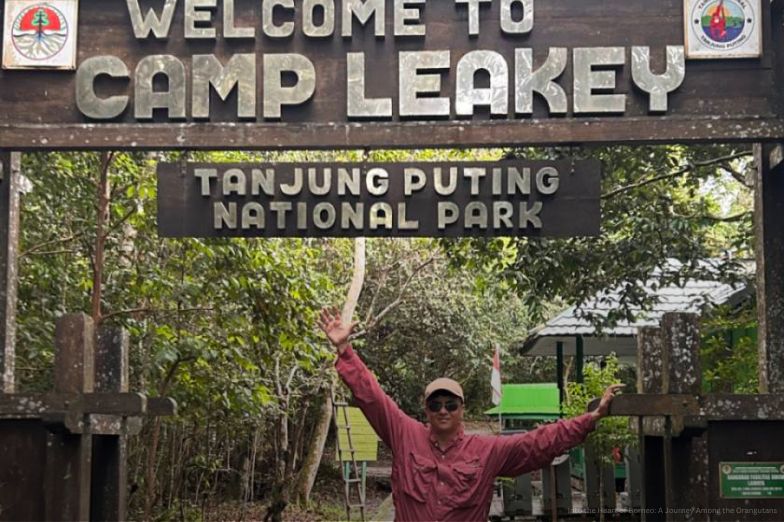
Camp Leakey: The Heart of Orangutan Conservation in Borneo
For years, I had dreamed of visiting one of the world’s most renowned orangutan research and rehabilitation centers: Camp Leakey in Tanjung Puting National Park.
Named after the famous anthropologist Louis Leakey — whose mentorship also inspired Dr. Jane Goodall and Dian Fossey — Camp Leakey was established in 1971 to study and protect the region’s wildlife, particularly the Bornean orangutan. The camp has also played a critical role in rehabilitating orphaned and displaced orangutans and returning many of them to the wild. It is the world’s longest-running orangutan research station, and one of the most important wildlife conservation sites in Southeast Asia.
This was a place that had occupied my imagination for many years.
The Klotok Experience: Traveling Borneo's Sekonyer River by Riverboat
To reach it, we commissioned a boat to take us down the Sekonyer River. I convinced my friends to choose a four-day, three-night journey aboard a traditional klotok riverboat — named after the rhythmic “klotok-klotok” sound of its engine. Our boat became our home. It was where we ate, talked, watched the jungle drift by, and slept beneath mosquito nets each evening.
There was no air conditioning, no Wi-Fi, and no onboard entertainment. At night, the crew pushed aside the tables and laid out thin mattresses while the sounds of the rainforest echoed around us. It was a full immersion into the jungles of Borneo — and one of the most unexpectedly peaceful travel experiences I have ever had.
How to Get to Tanjung Puting National Park
After arriving at Pangkalan Bun from Jakarta, we made the short drive to the port town of Kumai, the gateway to Tanjung Puting National Park. After a quick stop to purchase snacks and supplies, we boarded our klotok and slowly disappeared into the rainforest.
The transformation was immediate. The river narrowed and the jungle closed in around us. Massive trees leaned over the water, their branches alive with movement and sound. Proboscis monkeys with their comically long noses lounged in the treetops, macaques darted along the riverbanks, and hornbills soared overhead.
| Planning Detail | What You Need to Know |
|---|---|
| Fly Into | Pangkalan Bun Airport (PKN) via Jakarta (CGK) — approx. 1.5 hr flight. |
| Transfer to Port | Short drive from Pangkalan Bun to Kumai Port (20–30 minutes). |
| Boat Type | Traditional klotok riverboat — live, eat, and sleep aboard. |
| Recommended Duration | Minimum of 4 days / 3 nights. Longer trips provide more opportunities for wildlife viewing. |
| Best Season | April to October (dry season) for calmer rivers and better wildlife sightings. |
| What to Pack | Insect repellent, lightweight long sleeves, rain gear, waterproof bags, binoculars. |
| Budget Range | Klotok charter from approx. $150–$400 USD/day (covers boat, crew, meals, guide). |
| Park Entry | Tanjung Puting National Park permit required — arranged through your operator. |
| Photography | Bring telephoto lens; early morning and late afternoon offer best light. |
| Key Site | Camp Leakey — the world's longest-running orangutan research station (est. 1971). |
The Wildlife of Borneo: What You Will Encounter
The Sekonyer River is a wildlife corridor unlike anything most travelers have experienced. The jungle does not reveal itself quietly — it announces itself immediately.
| Species | Where to Spot | Conservation Status |
|---|---|---|
| Bornean Orangutan | Forest canopy, feeding stations near Camp Leakey | Critically Endangered |
| Proboscis Monkey | Riverbank trees along the Sekonyer River | Endangered |
| Pygmy Elephant | Northern Borneo (Sabah) | Endangered |
| Clouded Leopard | Dense interior rainforest | Vulnerable |
| Rhinoceros Hornbill | Canopy flyovers visible from the klotok | Vulnerable |
| Long-tailed Macaque | Riverbanks and forest edges | Least Concern |
| Irrawaddy Dolphin | Sekonyer River and coastal waters | Endangered |
But the true stars of Borneo are its orangutans.
The Bornean Orangutan: Why They Are Unlike Any Other Animal on Earth
The word orangutan comes from the Malay words orang hutan, meaning “person of the forest.” After spending time with them, it becomes abundantly clear why.
Orangutans are among our closest relatives, sharing nearly 97% of our DNA. They are incredibly intelligent creatures, capable of using tools, solving complex problems, and even passing knowledge from one generation to the next. Scientists have observed them fashioning umbrellas from leaves, creating gloves from branches to handle spiny fruits, and carefully teaching their young which plants are edible and how to navigate the forest.
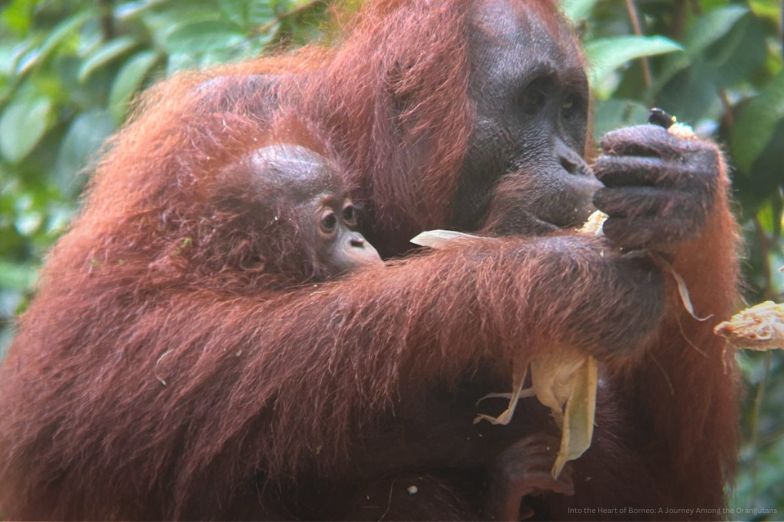
Unlike many other primates, orangutans live largely solitary lives. Mothers spend nearly a decade raising a single offspring — one of the longest childhoods in the animal kingdom outside of humans. Watching a mother gently guide her young through the forest canopy was one of the most moving wildlife experiences I have ever had.
Over the course of our journey, we had several opportunities to disembark and hike into the jungle with our guide. Some sightings occurred near feeding stations, where park staff supplemented the diets of rehabilitated orangutans preparing for life in the wild. But the moments I treasure most were the unexpected encounters — seeing a large male move silently through the trees or watching a mother and infant slowly swing through the canopy.
There is something profoundly humbling about looking into the eyes of an orangutan. You cannot help but recognize a deep intelligence staring back at you.
The Threat to Borneo's Orangutans: Palm Oil, Logging, and Habitat Loss
Sadly, these magnificent primates face an uncertain future. The rainforests of Borneo have been under immense pressure for decades from logging, mining, and the expansion of palm oil plantations. Vast stretches of forest that once supported thriving wildlife populations have disappeared. As the forests vanish, orangutans lose not only their homes but also their food sources and migration corridors. Thousands have been killed or displaced, and orphaned young often end up in rehabilitation centers such as Camp Leakey.
Why Visiting Borneo for Orangutans Matters
Yet there is reason for hope. Places like Tanjung Puting National Park demonstrate that conservation can work. Protected areas, scientific research, ecotourism, and local community involvement are helping preserve one of the last strongholds for these incredible animals. Every visitor who journeys into these forests contributes to their protection by creating economic incentives to keep the rainforest standing.
Over the course of my life, I have traveled to many remarkable places. Many have been breathtaking, and I would return to them in a heartbeat. But very few places stay with me as deeply as the days I spent aboard that little klotok in the jungles of Borneo.
I had almost no access to modern conveniences — no phone signal, very little electricity, torrential rains that rocked our boat each night, and mosquitoes that seemed impossibly large. When the calendar turned to a new year during our journey, it felt strangely insignificant. Time moved differently in the rainforest.
I will return to Borneo one day. There is a charm and authenticity to this corner of the world that has completely captured me. But more than that, I want to return because places like this matter.
The orangutans of Borneo are not simply another wildlife attraction on a travel itinerary. They are living symbols of one of Earth’s last great rainforests and reminders of our responsibility as stewards of this planet. If we lose them, we lose something irreplaceable.
I hope more travelers will make the journey to Borneo — not only to witness these extraordinary creatures in their natural habitat but also to become ambassadors for their protection. The future of the orangutan depends on preserving the forests they call home, and every person who experiences their world firsthand leaves with a deeper understanding of why that fight is so important.
Frequently Asked Questions About Seeing Orangutans in Borneo
Where is the best place to see orangutans in the wild in Borneo?
Tanjung Puting National Park in Central Kalimantan, Indonesia is widely regarded as the best place in the world to see Bornean orangutans in their natural habitat. Camp Leakey, located within the park, is the world’s longest-running orangutan research and rehabilitation station and the most renowned site for close, ethical encounters with wild orangutans.
What is Camp Leakey in Borneo?
Camp Leakey is an orangutan research and rehabilitation center established in 1971 inside Tanjung Puting National Park in Indonesian Borneo. Named after anthropologist Louis Leakey — who also mentored Jane Goodall and Dian Fossey — it has spent over 50 years studying Bornean orangutans and rehabilitating orphaned individuals for release back into the wild. It is one of the most important wildlife conservation sites in Southeast Asia.
What is a klotok boat, and is it the best way to see Tanjung Puting?
A klotok is a traditional Indonesian riverboat, named after the rhythmic sound of its engine. It is the primary — and most immersive — way to explore Tanjung Puting National Park. Visitors live aboard the boat for the duration of their trip, eating, sleeping, and traveling the Sekonyer River as the jungle unfolds around them. A four-day, three-night klotok journey is the most commonly recommended itinerary.
How do I get to Tanjung Puting National Park?
Fly into Pangkalan Bun Airport (PKN) via Jakarta. From Pangkalan Bun, a short 20 to 30 minute drive brings you to the port town of Kumai, the main gateway to Tanjung Puting. From Kumai, you board your klotok and enter the park by river. Most visitors arrange their klotok charter and park permits through a local operator before arrival.
Are Bornean orangutans endangered?
Yes. The Bornean orangutan (Pongo pygmaeus) is classified as Critically Endangered by the IUCN Red List. Habitat destruction from logging, palm oil plantation expansion, and mining has dramatically reduced their numbers and fragmented the forests they depend on. Thousands of orangutans have been killed or displaced in recent decades, and rehabilitation centers like Camp Leakey play a vital role in recovering the population.
How genetically similar are orangutans to humans?
Orangutans share approximately 97% of their DNA with humans, making them one of our closest living relatives after chimpanzees and bonobos. This close genetic relationship is reflected in their remarkable intelligence — they use tools, solve complex problems, teach skills to their young, and demonstrate long-term planning, traits once thought exclusive to humans.
What other wildlife can you see in Borneo?
Borneo hosts extraordinary biodiversity found nowhere else on Earth. Beyond orangutans, visitors commonly encounter proboscis monkeys, long-tailed macaques, rhinoceros hornbills, and Irrawaddy dolphins along the Sekonyer River. The island’s interior rainforests are also home to pygmy elephants and the elusive clouded leopard, though deeper jungle access is typically required to see those species.
What is the best time of year to visit Borneo for orangutans?
The dry season, roughly April through October, is generally considered the best time to visit Tanjung Puting National Park. River levels are more predictable, trails are more accessible, and wildlife sightings tend to be more concentrated as animals seek out reliable water sources. That said, orangutans can be seen year-round, and even the wet season has its rewards in terms of lush scenery and fewer visitors.
Is orangutan tourism in Borneo ethical?
Ethical orangutan tourism — visiting protected national parks through licensed operators, maintaining respectful distances, and avoiding any direct physical contact — actively supports conservation. The revenue generated by ecotourism creates economic incentives for local communities to protect the rainforest rather than convert it. Camp Leakey and Tanjung Puting National Park are designed specifically to allow wildlife encounters that do not compromise the animals’ wellbeing or rehabilitation.
How does palm oil production threaten orangutans in Borneo?
Palm oil production is one of the leading drivers of deforestation in Borneo. As demand for palm oil — used in food products, cosmetics, and biofuels — has grown globally, vast areas of rainforest have been cleared to make way for plantations. This destroys the habitat orangutans depend on for food, shelter, and movement between forest areas. It has also led to thousands of orangutans being killed when they wander into plantation land. Choosing products with certified sustainable palm oil is one practical way consumers can support conservation efforts.